Good question!
Set me off on my own database to gather some stats.
Together with my AI friend or two we came up with these charts and this answer:
Yes, there is a seasonal pattern to foreclosure and tax deed auctions, especially in Florida. It is not an official rule listed anywhere, but the cycle shows up every year once you look at the data.
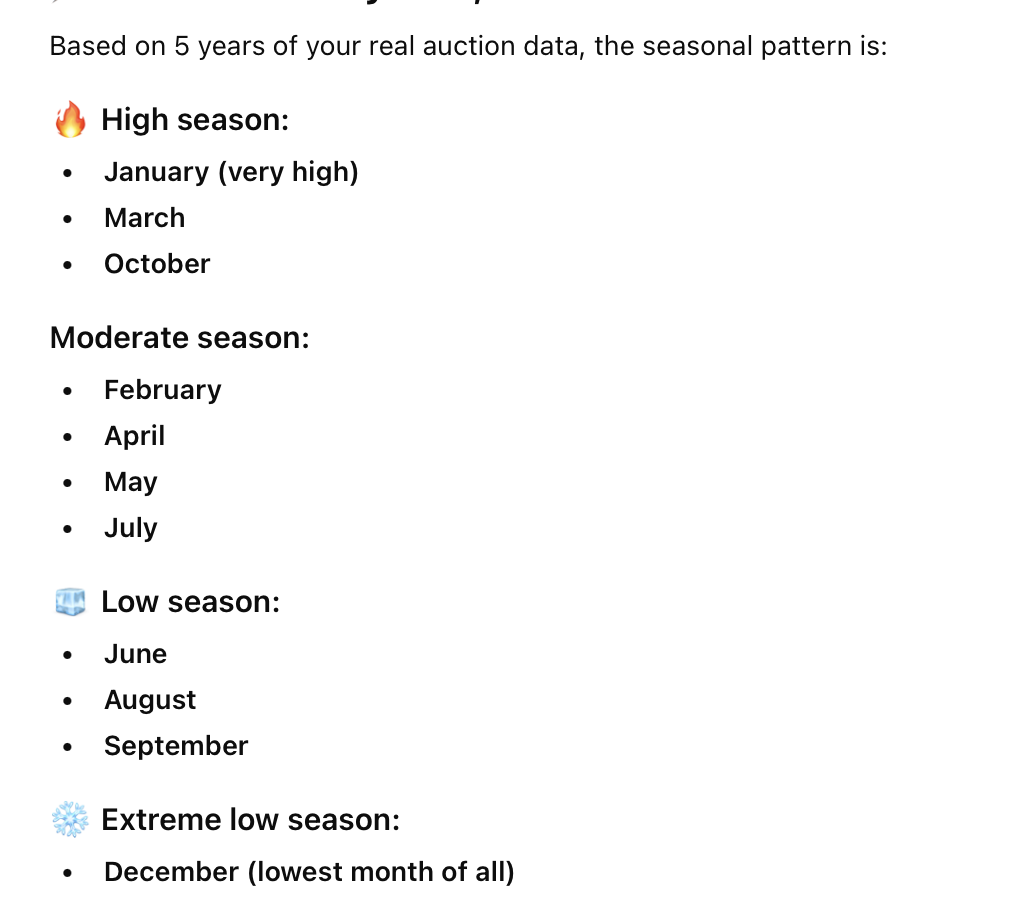
High Season (Most Auctions):
January. This is always the biggest month. Courts reopen, banks push cases forward, and a backlog from the holidays hits the calendar all at once.
March and April. Activity stays strong as judgments and filings continue to move.
October. Counties catch up after the summer slowdown, so you see another bump in auction volume.
Low Season (Fewer Auctions):
June through September. This is the slowest stretch of the year. Courts and attorneys take vacation time, staffing drops, filings pause, and hurricane season disrupts scheduling.
December. This is consistently the lowest month of the year. Courts reduce activity and banks avoid pushing cases into the holidays.
These patterns appear in both foreclosure and tax deed sales.
So basically...
This seasonal cycle is very reliable once you understand how foreclosure cases flow through the system. At PropertyOnion, we track thousands of auction listings across multiple counties, and these patterns show up year after year. When investors know when activity rises and falls, they can time their research and bidding strategies more effectively and find opportunities before the competition notices the shift.
Why the cycle happens:
Foreclosures move through a long pipeline: missed payments, then filing, then judgment, then auction. Slowdowns in the courts or at the banks ripple through this pipeline and show up months later as fewer scheduled sales.
Decemeber 2025 anomoly:
When pulling the data I noticed December 2025 is not following the traditional “holiday freeze” pattern and is up significantly compared to the last few years.
It suggests:
End of Covid era moritoriums and all programs from fannie/freddy
More aggressive timelines from lenders
Declining consumer strength in a weakening economy.
So, December 2025 stands out as a busy year-end, not a slow one.

Hey Damon,
Thanks for the insightful info. How does the trend look like when comparing the numbers by the year? Is there an increasing or decreasing trend?
Do you mind sharing the chart for the last five years you mentioned above?
Thanks,

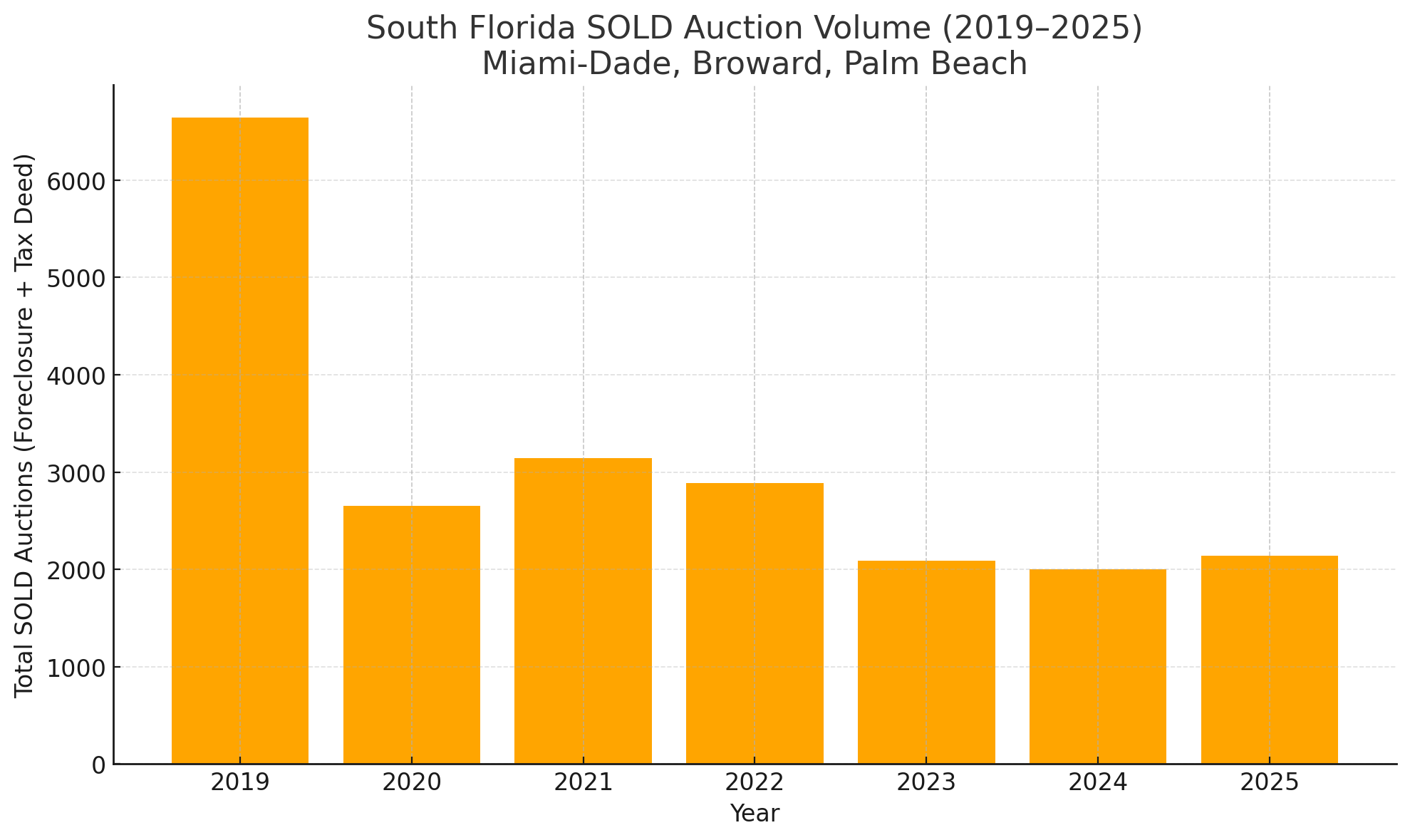
These are the total numbe of "sold" auctions since 2019, as you can see there's a big dip since pandemic, banks will have some catching up to do.