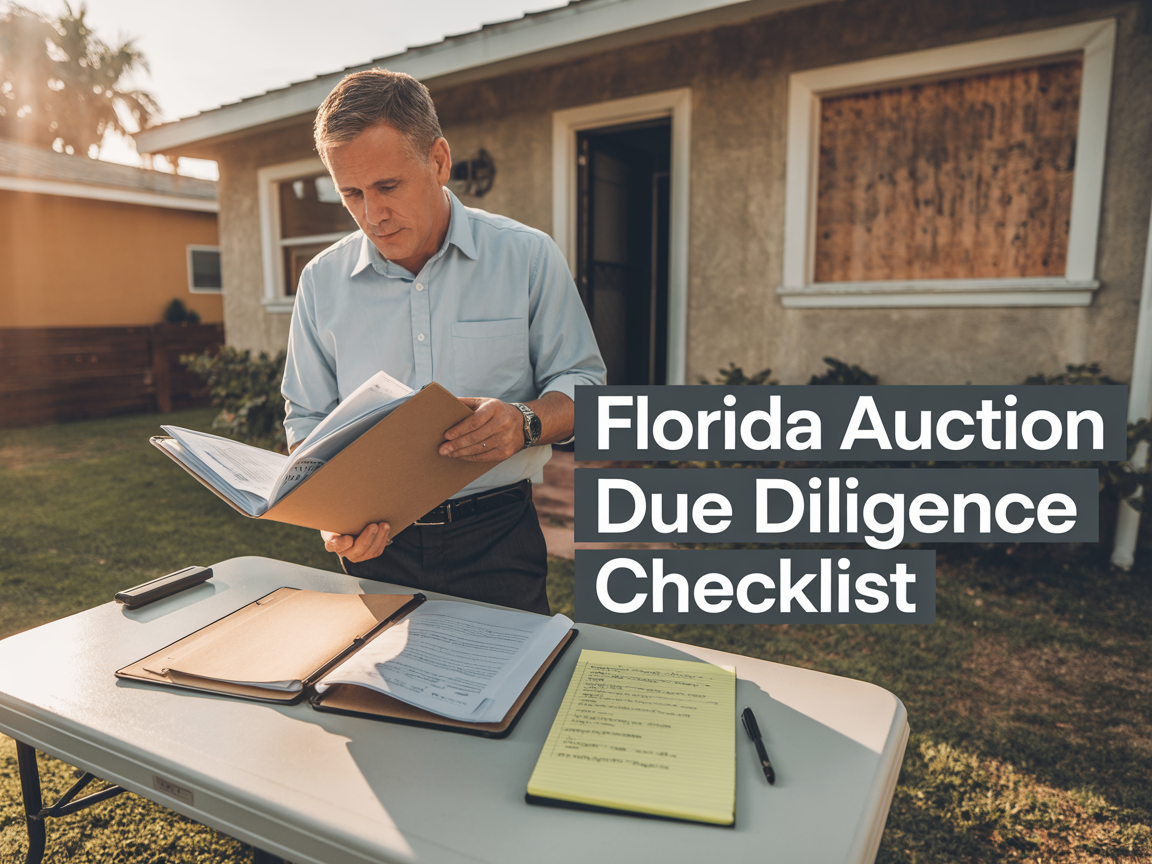
Buying at a Florida foreclosure or tax deed auction can be one of the most profitable moves a real estate investor makes. It can also be one of the most expensive mistakes they ever make if they skip proper preparation. The difference between those two outcomes almost always comes down to how thoroughly an investor completed their pre-bid research. A solid florida auction due diligence checklist is not optional. It is the foundation every smart auction buyer builds their bidding strategy on.
This guide walks through every category of research you need to complete before placing a single dollar at a Florida county auction. Whether you are a first-time auction buyer or a seasoned investor who has been through hundreds of sales, running through a structured florida auction due diligence checklist before each bid keeps you from letting excitement override judgment.
Why a Florida Auction Due Diligence Checklist Matters More Than You Think
Florida auction properties are sold as-is. There are no inspection contingencies, no seller disclosures, and no financing conditions that let you walk away after the gavel falls. Once you win a bid and post your deposit, you are committed. Any issues you discover after the sale become your responsibility to resolve. That reality is why completing a florida auction due diligence checklist before bidding is not just good practice. It is self-preservation.
The risks are real and varied. A property can carry IRS federal tax liens that survive the foreclosure sale. Code enforcement liens from the municipality can attach to the land and follow it through any transfer. HOA super-priority claims can complicate your ownership. A title that looks clean on a quick search can hide decades-old judgments or an heir claim from a long-forgotten estate. The only way to know what you are actually buying is to do the research. Understanding what due diligence in real estate really means at the auction level is the first step every investor needs to take seriously.
Step One: Pull the Title Search Before You Ever Set a Max Bid
The most important item on any florida auction due diligence checklist is the title search. This is where you discover what encumbrances, liens, judgments, and ownership issues attach to the property. A full 30-year title search gives you a complete picture of the chain of title and any clouds that have accumulated over the years.
At minimum you want to identify all recorded liens and whether they survive the foreclosure or tax deed sale. A florida title search should cover recorded mortgages, judgment liens, IRS tax liens, state tax warrants, HOA liens, code enforcement liens, utility liens, and any lis pendens or pending litigation. Each of these carries different rules about whether it is extinguished or survives a sale. Do not assume a foreclosure wipes everything clean. Federal tax liens, for example, require a specific IRS notice and redemption period before they are cleared.
Investors often make the mistake of doing a quick name search and calling it research. That is not a title search. A real title search traces the property through the deed records, not just the current owner. It is also worth knowing the most common title search mistakes auction buyers make so you can avoid them during your own pre-bid research.
Step Two: Confirm the Mortgage Payoff and Lien Priority
For foreclosure auctions specifically, you need to understand the lien priority stack and what the winning bidder will actually be taking on. The foreclosing party sets the opening bid, which typically includes the judgment amount plus fees. But other liens may survive depending on their priority and whether they were properly named in the foreclosure action.
Knowing how to get mortgage payoff amounts on your foreclosure auction property before the sale helps you calculate your true cost basis. If a second mortgage was not extinguished, that balance becomes your responsibility after you take title. If the opening bid at auction is $85,000 but there is a surviving $40,000 second lien, your real acquisition cost is $125,000 plus closing costs and any rehab. That changes your numbers entirely.
HOA liens require special attention in Florida. Under Florida Statute 720, an HOA has a limited priority lien for up to 12 months of unpaid assessments. Even if the HOA was named in the foreclosure, confirm directly with the association what is owed at the time of sale. HOA attorneys will sometimes wait until after the auction to present their claim, which can catch inexperienced buyers off guard.
Step Three: Assess the Physical Property Condition
Because Florida auction properties are sold without inspection contingencies, you need to do as much physical assessment as legally possible before bidding. You cannot enter the property without permission if it is occupied, but a drive-by inspection tells you a great deal. Look at the roof condition, foundation visible from the exterior, signs of water damage or structural issues, condition of windows and doors, and the overall state of the landscaping and exterior.
If the property is vacant and accessible, a walkthrough before the auction is standard practice for serious investors. Many savvy buyers bring a contractor to get a rough estimate of rehab costs from the exterior alone. An experienced contractor can often identify roof age, HVAC condition, and likely plumbing or electrical issues just from a walkthrough of the exterior and any accessible areas. That rough number needs to feed directly into your maximum bid calculation.
Also check permit history through the county building department. Unpermitted additions or work done without permits can trigger code enforcement action after you take ownership. Florida counties make permit records available online, and spending 20 minutes pulling the history on a property before bidding can save you tens of thousands in code compliance costs later.
Step Four: Verify the Property Appraiser and Tax Records
Every county in Florida maintains a public property appraiser website where you can pull the assessed value, taxable value, exemptions, and ownership history. This is a free resource that should be a standard part of your florida auction due diligence checklist on every single property.
The property appraiser record tells you the current owner of record, the year the property was last sold and for how much, the square footage and lot size, the property class and zoning, and whether a homestead exemption was in place. If a homestead exemption is active, the property tax base has been protected under the Save Our Homes cap. Once the property transfers, that cap resets, which means the new assessed value could increase significantly and raise your carrying costs on a rental hold.
You also want to confirm that all property taxes are current or understand exactly what is owed. At a tax deed sale the delinquent taxes are the basis of the sale itself, so the county records will show the amounts involved. For a foreclosure auction, unpaid property taxes may survive the sale and need to be paid to clear title for resale or refinancing. The Florida Department of Revenue property tax page is a useful reference for understanding how Florida property taxes work and what obligations attach to ownership.
Step Five: Check Code Enforcement and Municipal Violations
Code enforcement liens are one of the most overlooked items on a florida auction due diligence checklist. These liens attach to the land and survive most transfers, including tax deed sales. A property that looks cosmetically fine can have outstanding violations worth tens of thousands of dollars, including daily accruing fines that have been running for years.
To check for code enforcement violations, contact the municipal code enforcement office directly. Many Florida cities and counties have online portals where you can search by address. Look for open violation cases, unpaid fines, lien notices filed in the official records, and any notices of violation that might not yet have progressed to a recorded lien. A property with a $50,000 accrued code enforcement lien that you discover after winning the auction is a very different investment than the one you thought you were buying.
Also check with the utility companies for any outstanding balances. In some municipalities, unpaid water and sewer bills can result in liens that survive a sale and attach to the new owner.
Step Six: Understand the Foreclosure Auction Process Itself
Your due diligence is not only about the property. It includes understanding how the specific auction you are participating in works. Florida foreclosure auctions are primarily conducted online through platforms like RealAuction. Tax deed sales are administered by the county clerk. Each has its own registration requirements, deposit rules, payment timelines, and bidding mechanics.
Before participating in any sale, review how florida foreclosure auctions work from start to finish. Know your deposit requirements, know when final payment is due, and know what happens if you win and cannot complete the purchase. Defaulting on an auction purchase in Florida has real financial consequences including forfeiture of your deposit.
For foreclosure sales, also pull the final judgment amount from the court file. The case number is public record and the court file will show you the judgment total, any amounts added for attorney fees and costs, and whether any surplus is expected if the property sells above the judgment. Understanding the florida foreclosure timeline helps you understand how long the process took to reach the sale date and what stage of the foreclosure the property is in.
Step Seven: Know Your Post-Sale Title Strategy Before You Bid
The last item on a thorough florida auction due diligence checklist is your exit plan for the title itself. Tax deed properties in Florida often require a quiet title action before a title insurance company will issue a policy. Without insurable title, your ability to resell or refinance the property is severely limited. The cost of a quiet title action and the time it takes need to be factored into your holding cost analysis before you determine your maximum bid.
Understanding what a quiet title action in florida involves and when it is required helps you plan your timeline accurately. Some investors build the quiet title cost directly into their acquisition budget. Others focus exclusively on properties where title can be insured immediately after the sale. Either approach is valid, but the decision needs to be made before you bid, not after.
For foreclosure sales, title is generally more straightforward because the judicial process names and extinguishes junior liens, but title insurance companies still want to see a clean title search and may have their own requirements before issuing a policy. Work with a Florida real estate attorney or title company experienced in auction properties to understand exactly what will be required for the specific property you are targeting.
Build Your Florida Auction Due Diligence Checklist Into Every Deal
Experienced auction investors do not skip steps because a deal looks good on the surface. They run through their florida auction due diligence checklist on every property they consider, every time. The discipline of consistent pre-bid research is what separates investors who build wealth through auctions from those who occasionally win properties only to discover problems that eliminate their profit.
The checklist is not complicated. Pull the title search. Verify the lien stack and mortgage payoffs. Assess physical condition. Review property appraiser records and tax status. Check code enforcement and municipal violations. Understand the auction mechanics. Know your post-sale title strategy. Every one of these steps can be completed before the auction date with publicly available records and a modest investment of time.
If you want to go deeper on the research process and the strategies experienced Florida auction investors use to evaluate and win profitable deals, PropertyOnion offers a 1-on-1 foreclosure and tax auction course that walks through the full process from property identification to closing. Our team also provides professional title search services for auction buyers who want a complete pre-bid title report before they set their maximum bid. Contact us through the PropertyOnion website to learn more about either resource.






Comments