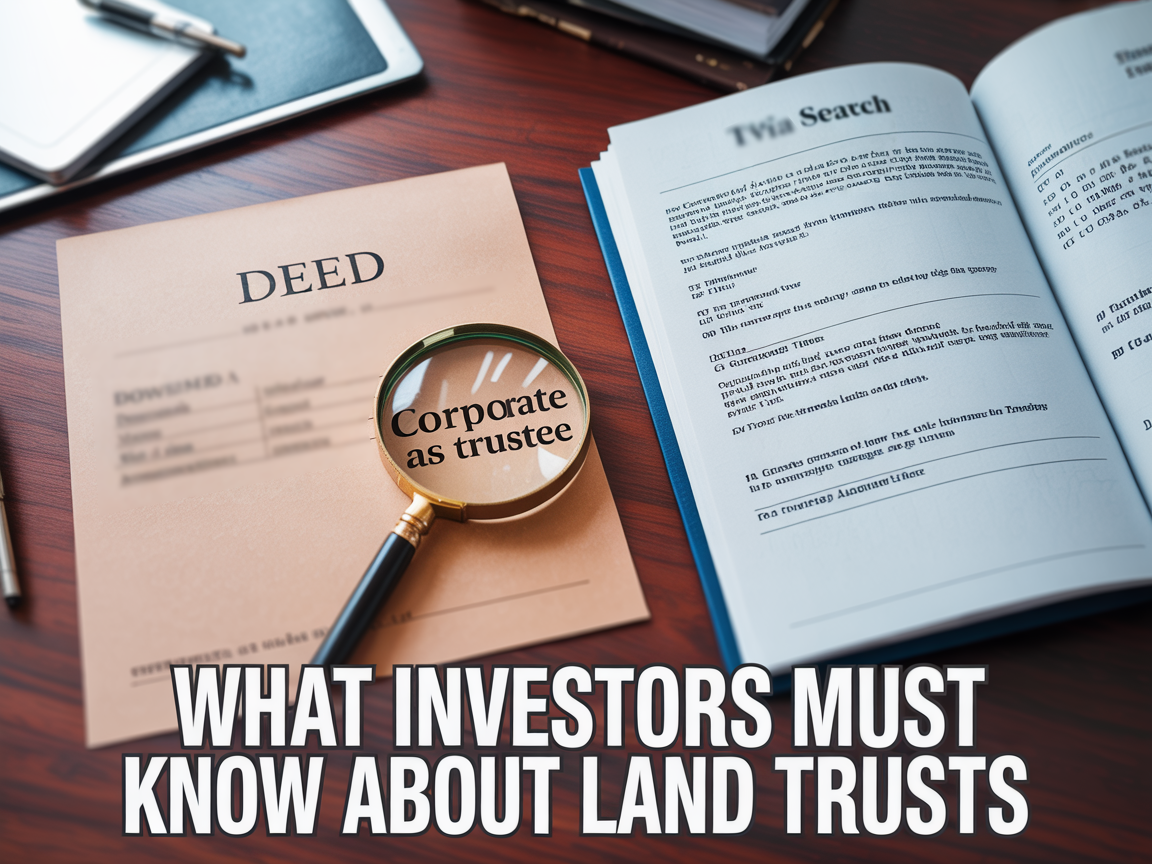
Florida land trusts are a legal ownership structure that a significant number of Florida property owners use for privacy, estate planning, and asset protection purposes. For foreclosure auction investors, florida land trusts foreclosure situations create a specific set of research and title considerations that differ from standard individual or corporate ownership scenarios. Understanding how land trusts work under Florida law, how they affect the foreclosure process, and what you need to verify before bidding on a property held in a land trust gives you a meaningful edge over investors who treat every auction property the same way regardless of how title is held.
This article covers the basics of how florida land trusts work, the specific issues they create in the foreclosure and title context, what investors need to verify before bidding on trust-held properties, and the post-auction considerations that apply when you take title from a land trust through the foreclosure process.
How Florida Land Trusts Work
A Florida land trust is a revocable trust created under Florida Statute 689.071, commonly known as the Florida Land Trust Act. The trust holds title to real property, with a trustee named as the record owner in the county official records. The beneficial interest in the trust, meaning the actual economic ownership, is held by one or more beneficiaries whose identities are not recorded publicly. The trustee acts on behalf of the trust and the beneficiaries according to the terms of a trust agreement that is also not recorded publicly.
The primary appeal of a florida land trust is privacy. Because only the trustee’s name appears in the public records, the beneficial owners of the property are not directly discoverable through a standard title or ownership search. This makes land trusts popular among investors who want to keep their real estate holdings private, among property owners who want to avoid probate on death, and among those who use the trust as part of a broader asset protection structure. The trustee is often a corporate entity rather than an individual, which further obscures the connection between the property and its true owners.
How Florida Land Trusts Affect the Foreclosure Process
When a property held in a florida land trust enters the foreclosure process, the lender must name the trustee as the defendant in the foreclosure action because that is who holds record title. However, properly naming only the trustee may not be sufficient to extinguish all interests in the property. The beneficial interest holders may also need to be named and served depending on the circumstances and the lender’s legal strategy. Florida courts have addressed florida land trusts foreclosure cases in ways that make the title outcome dependent on how carefully the foreclosure action was conducted.
For investors bidding at auction on a property held in a land trust, the key question is whether the foreclosure action properly addressed all interests in the trust structure. A foreclosure that named only the corporate trustee without identifying and serving the beneficial interest holders may have gaps in the lien extinguishment that a title company or attorney needs to evaluate before you can obtain title insurance. This is not a reason to automatically avoid trust-held properties at auction, but it is a reason to order a professional title search and get a specific opinion on the adequacy of the foreclosure service before you bid. The broader issues of how florida land trusts foreclosure situations affect your post-acquisition title strategy are covered in depth in the PropertyOnion article on florida land trusts foreclosure investing.
Identifying Land Trust Ownership Before You Bid
Identifying whether a property is held in a florida land trust before the auction requires reviewing the most recent deed in the official records. A land trust deed typically names a trustee in a form such as “ABC Trust Company, as Trustee under Trust Agreement dated [date]” or similar language. The absence of a named individual grantor and the presence of trustee language is your signal that you are looking at a trust-held property that warrants additional research.
Once you identify trust ownership, your next step is to determine who the trustee is and whether the trustee is still active. Corporate trustees that have dissolved, merged, or changed their name create additional complications in the chain of title that need to be resolved before the property can transfer cleanly. Search the Florida Division of Corporations records at MyFloridaCounty.com and the Florida Secretary of State to verify the current status of any corporate trustee named in the deed. A dissolved corporate trustee on a property heading to auction is a red flag that requires legal evaluation before you bid.
Post-Auction Considerations for Land Trust Properties
When you win a foreclosure auction on a florida land trust property, you receive a Certificate of Title from the clerk of court just as you would on any other foreclosure purchase. The Certificate of Title transfers ownership to you directly, superseding the trust structure. However, the trust itself and any beneficial interests that were not properly addressed in the foreclosure action may require additional legal steps to fully extinguish.
Working with a Florida real estate attorney who has specific experience in florida land trusts foreclosure situations is strongly recommended for any trust-held auction property before you bid and immediately after you win. The cost of a legal opinion before the auction is modest relative to the potential complications of discovering post-acquisition title issues that your title insurance company will not cover without additional remediation. A clear title review that specifically addresses the trust structure gives you the confidence to bid appropriately and plan your post-acquisition strategy accurately.
For investors who want to understand the full due diligence picture on auction properties beyond land trust considerations, the florida auction due diligence checklist covers the complete pre-bid research process that applies across all property types and ownership structures. Combining that framework with a specific understanding of how trust-held properties differ gives you a comprehensive approach to pre-bid research that handles the most common complications Florida auction investors encounter. The Florida Statute 721 resource also provides background on related Florida property trust law that helps investors understand the broader legal landscape governing trust-held properties in the state.
Beyond title considerations, trust-held properties sometimes present occupancy complications as well. Beneficial interest holders who are living in the property at the time of foreclosure have the same occupancy rights as any other former owner, and the same foreclosure eviction florida process applies to remove them after you take title. Understanding how to handle foreclosure eviction florida situations in the context of trust-held properties gives you a complete operational picture from bid to possession.
Investors who take the time to understand florida land trusts foreclosure dynamics before bidding consistently make better title decisions and avoid post-acquisition surprises that less-prepared bidders walk into.
Get the Edge Serious Florida Investors Use
PropertyOnion members get access to foreclosure and tax deed listings, ownership change alerts, off-market deal flow, and tools built specifically for Florida auction investors. Stop piecing together data from multiple sources. Join PropertyOnion today and start finding better deals faster.