Florida is a judicial foreclosure state, and that single fact shapes everything about how the foreclosure process works and what it means for real estate investors. Understanding florida foreclosure laws is not just background knowledge. It is the foundation of every pre-bid research decision, every title evaluation, and every timeline projection an auction investor makes. The judicial process creates specific protections for property owners, specific rights for lienholders, and specific outcomes for investors that differ significantly from the non-judicial foreclosure states where a lender can sell a property without ever going to court.
This article covers the key provisions of florida foreclosure laws that matter most to auction investors, how the judicial process progresses from default to auction, what rights and timelines apply at each stage, and how the legal framework affects the title and lien stack you inherit when you win at a Florida foreclosure sale.
Why Florida Foreclosure Laws Require a Judicial Process
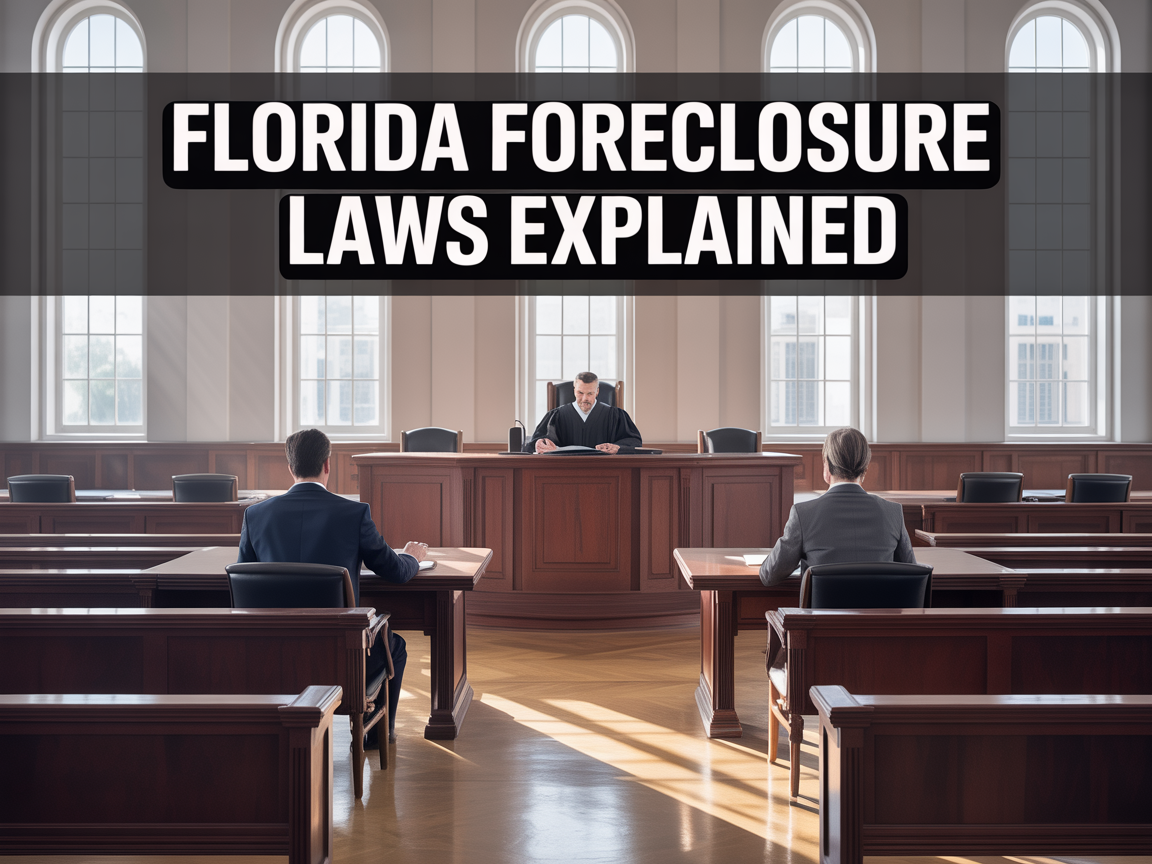
In Florida, a lender cannot foreclose on a mortgage without filing a lawsuit in the circuit court of the county where the property is located. This requirement distinguishes Florida from non-judicial foreclosure states where a trustee can conduct a sale under a deed of trust without court involvement. The judicial requirement under Florida Statute 702 means that every foreclosure auction property you bid on has gone through a court-supervised process that named defendants, served parties, and produced a final judgment before the auction was scheduled.
For investors, this judicial requirement has both advantages and complications. The advantage is that the judicial process creates a cleaner lien extinguishment outcome than non-judicial sales. When a lender properly names and serves all junior lienholders as defendants in the foreclosure action, those liens are extinguished by the final judgment and do not survive to the auction buyer. The complication is that the process takes time, often 12 to 36 months or more from the initial filing to the auction date, depending on the complexity of the case, whether the borrower contests the action, and the backlog in the local circuit court. Tracking where a specific property sits within the florida foreclosure timeline helps investors anticipate when a property will reach the auction block and prioritize their research accordingly.
The Foreclosure Process Under Florida Law: Stage by Stage
Florida foreclosure laws govern a process that moves through several distinct stages before a property reaches the auction block. The process begins when a borrower falls behind on mortgage payments and the lender issues a notice of default. Once the default period passes without cure, the lender files a foreclosure complaint in circuit court and records a lis pendens in the county official records simultaneously. That lis pendens is the investor community’s earliest public signal that the property is entering the foreclosure pipeline.
After the complaint is filed and served on all defendants, the case proceeds through the court system. If the borrower does not contest the action, the lender typically files a motion for summary judgment after the response period expires. The court schedules a hearing, and if the evidence supports the lender’s position, a final judgment of foreclosure is entered specifying the amount owed and ordering the property sold at public auction. The clerk of court then schedules the auction, typically providing at least 20 days of public notice before the sale date.
The Florida Courts system maintains public access to court filings that allow investors to track every stage of this process for any case in the state. Monitoring the court file from the lis pendens filing through the final judgment gives investors the ability to anticipate the auction date weeks or months in advance and complete their pre-bid research without last-minute scrambling.
The Right of Redemption Under Florida Foreclosure Laws
One of the most investor-relevant provisions of florida foreclosure laws is the right of redemption. Florida gives the borrower the right to cure the default and redeem the property by paying the full judgment amount plus costs and fees at any point up until the certificate of title is issued after the auction. This right does not expire at the auction itself. A borrower who finds the funds to pay off the judgment after the auction but before the clerk issues the certificate of title can technically reclaim the property, though this outcome is rare in practice.
More practically relevant for investors is understanding that a property with a pending redemption right requires careful timing around your post-auction expenditures. Investors who immediately begin spending on inspections, attorney fees, or preliminary rehab work after winning an auction but before receiving the certificate of title are taking on risk that the redemption right eliminates. Wait for the certificate of title before committing significant post-acquisition expenses, particularly on properties where the borrower appeared financially motivated to redeem up until the auction date.
What Florida Foreclosure Laws Mean for Lien Survival
The lien extinguishment rules under florida foreclosure laws are one of the most practically important areas for auction investors to understand. When a first mortgage holder forecloses and properly names all junior lienholders as defendants, the foreclosure judgment extinguishes those junior interests. The winning bidder at the auction takes title free of those extinguished liens. This is the primary title advantage of buying at a first mortgage foreclosure sale compared to a tax deed sale where no equivalent judicial extinguishment process applies.
However, florida foreclosure laws do not extinguish all encumbrances automatically. Federal tax liens are governed by federal law, and the IRS must receive specific notice and have its redemption rights honored before a federal lien is extinguished. The IRS federal tax lien guidance explains the notice requirements and 120-day redemption period that apply when a property with a federal lien goes to foreclosure auction. Any lien not properly named or served in the foreclosure action may also survive regardless of its priority position. This is why a thorough pre-bid title search is non-negotiable on every foreclosure auction property you evaluate, even when the judicial process appears to have run cleanly.
Deficiency Judgments Under Florida Foreclosure Laws
Florida foreclosure laws also govern what happens when the auction sale price does not cover the full judgment amount. If a property sells at auction for less than the outstanding judgment, the lender may have the right to pursue a deficiency judgment against the borrower for the remaining balance. As an investor buying at the auction, the deficiency judgment issue does not directly affect you because your obligation is limited to your winning bid amount. However, understanding deficiency judgment exposure helps you evaluate how motivated lenders are to bid up their own properties at auction versus accepting a lower price and pursuing the borrower for the difference.
The CFPB foreclosure resource provides additional context on borrower rights and lender remedies in the foreclosure process that helps investors understand the dynamics at play between lenders and borrowers leading up to the auction.
How Florida Foreclosure Laws Affect Your Buying Strategy
The practical implications of florida foreclosure laws for auction investors come down to three key points. First, the judicial process creates a relatively clean title outcome when the foreclosure was properly conducted, making first mortgage foreclosure auctions generally safer from a title standpoint than tax deed sales. Second, the lengthy timeline from filing to auction creates a pre-auction research window that well-prepared investors use to their competitive advantage while less prepared bidders are still pulling basic property information on auction day. Third, the lien extinguishment rules reward investors who do thorough pre-bid title research and penalize those who assume the judicial process automatically cleaned everything up without verification.
Understanding florida foreclosure auctions in the context of the legal framework that creates them gives you a meaningful edge over investors who approach the auction as a purely transactional event without understanding the legal mechanics behind it. That knowledge translates directly into better bid decisions, fewer post-acquisition surprises, and more consistently profitable deals across your Florida auction investing career. For investors who want to understand how the foreclosure process connects to identifying distressed properties early, tracking florida lis pendens filings in your target markets is the most direct application of florida foreclosure laws knowledge to a practical deal-finding system.
Get the Edge Serious Florida Investors Use
PropertyOnion members get access to foreclosure and tax deed listings, ownership change alerts, off-market deal flow, and tools built specifically for Florida auction investors. Stop piecing together data from multiple sources. Join PropertyOnion today and start finding better deals faster.