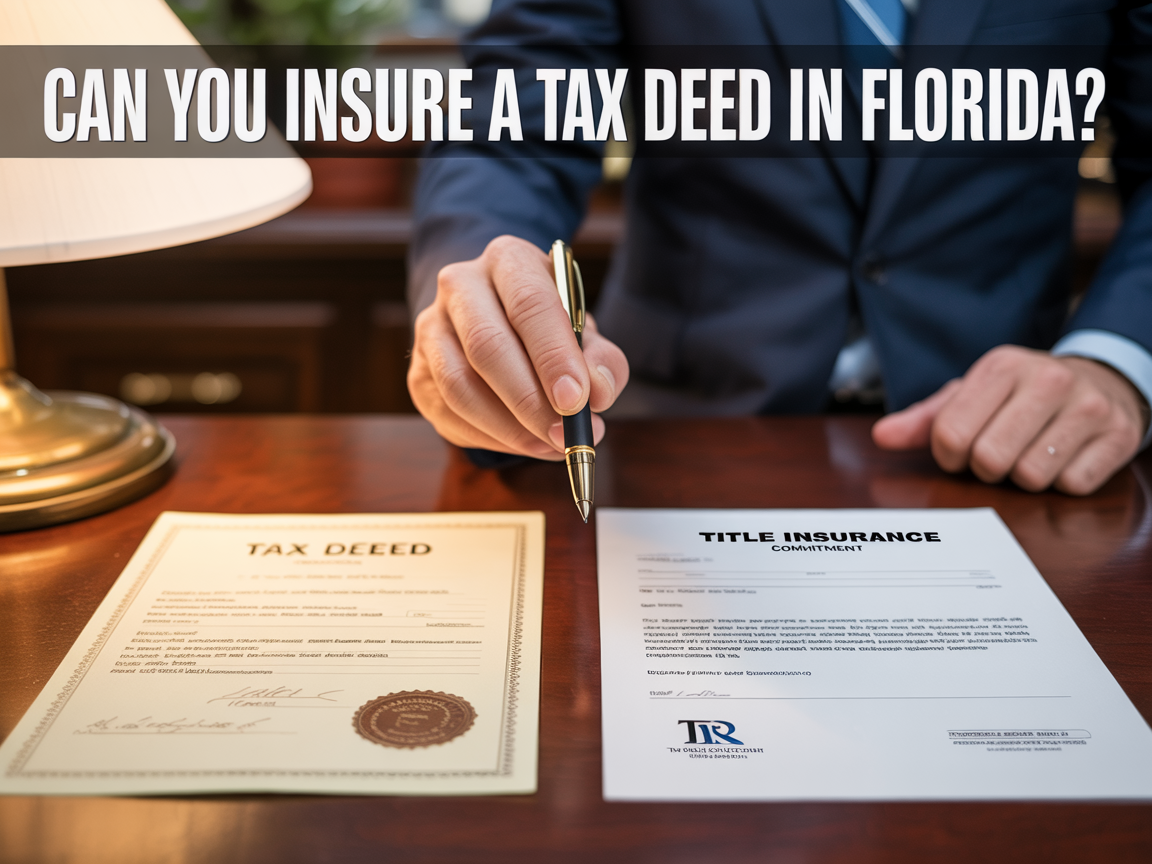
One of the most practical obstacles Florida tax deed investors face after winning at auction is the difficulty of obtaining title insurance. Tax deed title insurance florida investors need to sell or refinance their properties is not automatically available the way it is on a conventional real estate purchase. The tax deed process does not produce the same judicial clarity that a mortgage foreclosure does, and title insurance underwriters respond to that ambiguity by requiring additional legal steps before they will issue a policy. Understanding exactly why this happens, what those steps are, and how to plan for them before you bid is one of the most valuable operational skills a Florida tax deed investor can develop.
This article explains why tax deed title insurance florida is complicated, what a quiet title action accomplishes and when it is required, how title companies evaluate tax deed properties, and how to build the cost and timeline of the title insurance process into your acquisition analysis before you ever set foot in the auction room.
Why Tax Deed Title Insurance Florida Is Not Automatic
When a lender forecloses on a mortgage in Florida, the process goes through the circuit court. The court names all lienholders and interested parties as defendants, gives them the opportunity to respond, and ultimately issues a final judgment that extinguishes their interests in the property. The Certificate of Title issued after the foreclosure auction is backed by that judicial process. Title insurance companies are comfortable insuring foreclosure auction properties because the court has affirmatively cleared the lien stack through a recognized legal process.
A tax deed sale operates differently. The county collects delinquent taxes and sells the property, but there is no full judicial process that names and serves all potential claimants, gives them a day in court, and issues a judgment extinguishing their interests. Prior owners, heirs, mortgage holders, and other lienholders may have claims against the property that were not formally resolved through the tax deed process. Title insurance companies see those potential unresolved claims as underwriting risk they are not willing to accept without additional protection.
The result is that most Florida title insurance underwriters will not issue tax deed title insurance florida policies on properties recently acquired through a tax deed sale without either a quiet title action or a substantial seasoning period, typically four to five years of clean ownership history. For investors planning to flip or refinance within a normal investment timeline, waiting five years is not a realistic option. That makes the quiet title action the practical path to insurable title on most tax deed acquisitions.
What a Quiet Title Action Accomplishes
A quiet title action is a lawsuit filed in the circuit court of the county where the property is located. The plaintiff, which is the new tax deed owner, asks the court to declare that their title to the property is valid and superior to any other claimed interest. All potential claimants including prior owners, heirs, mortgage holders, and lienholders are named as defendants and served with notice. Those who do not respond within the statutory timeframe have their potential claims extinguished by the court judgment.
Once a final judgment is entered in the quiet title action, the tax deed owner holds court-confirmed title that is equivalent in the eyes of title underwriters to a foreclosure Certificate of Title. At that point, tax deed title insurance florida coverage becomes available on standard terms, and the investor can proceed with a conventional resale or refinance without the buyer pool limitations that come with uninsurable title.
Understanding the full scope of what a quiet title action florida involves helps you evaluate whether the cost and timeline fit your specific deal before you bid.
What Tax Deed Title Insurance Florida Actually Costs
The cost of a quiet title action in Florida varies by county and by the complexity of the title issues involved. A straightforward quiet title action on a residential property with a clean history and no contested claimants typically runs between $1,500 and $3,500 in attorney fees plus court costs. Actions involving contested claims, missing heirs, or complex lien histories can run significantly higher. Some Florida real estate attorneys offer flat-fee quiet title packages for tax deed investors who do volume work with them, which can bring the per-property cost down considerably.
Beyond the quiet title legal fees, the title insurance premium itself is a cost to factor in. Florida title insurance premiums are set by statute based on the purchase price or loan amount. For a $150,000 property, the owner’s title insurance premium runs approximately $875 under the Florida promulgated rate schedule. This cost applies regardless of whether the property went through a quiet title action or a conventional sale.
When building your maximum bid for a tax deed auction property, add the quiet title legal fees, court costs, and title insurance premium to your other carrying costs. Combined with property taxes, insurance on a vacant property, and any HOA assessments, the total cost of carrying a tax deed property through the quiet title process to a resale-ready state can add $5,000 to $10,000 or more to your total acquisition cost beyond the auction price itself. Running those numbers accurately before you bid is what separates investors who make money on tax deed deals from those who break even or worse.
When Tax Deed Title Insurance Florida May Be Available Without Quiet Title
Not every tax deed property in Florida requires a quiet title action before title insurance is available. Some underwriters will issue tax deed title insurance florida coverage without a quiet title action under specific circumstances. These typically include properties where the tax deed has been held for a substantial seasoning period without adverse claims, properties where the prior mortgage was clearly extinguished through a prior foreclosure before the tax deed sale, and properties where the title history is unusually clean and the underwriter’s risk assessment supports an exception.
Working with a Florida title company that specializes in tax deed and auction properties rather than a general residential closing company significantly increases your access to these exceptions. Specialized title companies have established relationships with underwriters who are familiar with the Florida tax deed process and more willing to evaluate properties individually rather than applying a blanket quiet title requirement. This is one area where having the right professional relationships in your market can meaningfully affect your deal economics and resale timelines.
Understanding the difference between a full title search vs OE report also matters here. A full 30-year search gives a title underwriter much more confidence in the property’s history and can sometimes be the deciding factor in whether a title company will issue coverage without requiring a quiet title action first.
Planning for Tax Deed Title Insurance Florida Before You Bid
The practical takeaway for investors is that tax deed title insurance florida considerations need to be built into your pre-bid analysis on every tax deed property you evaluate. Before setting your maximum bid, determine whether a quiet title action will likely be required by consulting a title company or real estate attorney familiar with the specific county and property type. Get a fee estimate for the quiet title work. Add that cost to your carrying cost model. Then decide whether the deal still makes sense at the price you are considering.
Investors who treat the quiet title requirement as a surprise they discover after winning consistently underperform compared to those who factor it in from the start. The quiet title process is a predictable, well-established legal procedure. It is a line item in your deal budget, and treating it as such is the mark of a sophisticated tax deed investor. Combined with a thorough florida title search on every property you consider, a clear understanding of the title insurance process is what allows you to bid with confidence at every tax deed auction you attend.
For investors focused on avoiding the most common pitfalls across the full tax deed acquisition process, reviewing the most frequent florida tax deed buyer mistakes alongside your title insurance planning gives you a comprehensive pre-bid checklist that covers both the legal and financial risk factors on every deal.
Get the Edge Serious Florida Investors Use
PropertyOnion members get access to foreclosure and tax deed listings, ownership change alerts, off-market deal flow, and tools built specifically for Florida auction investors. Stop piecing together data from multiple sources. Join PropertyOnion today and start finding better deals faster.